History of Holiday Lights

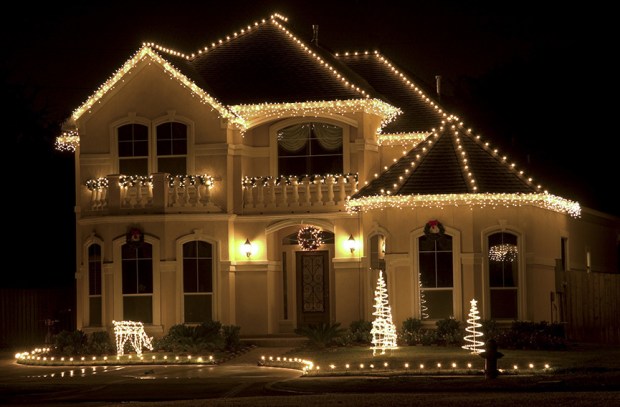
classic-white-christmas-roof-lights

Exterior holiday lights are as a part of the season as the Christmas tree, but did you know the history of the holiday lights we all know and love?

In 1882 the modern Christmas light was invented by Edward H. Johnson, inventor and vice president of Thomas Edison’s booming electric company, lit up his New York City home off Fifth Avenue with a string of 80 colorful lights.

Johnsons displays were so popular that patents for electric Christmas lights were starting to appear on the books in 1890. Magazines such as the New York Post and Scientific American began running advertisements for the rental of stringed Christmas lights in 1899 and 1900, and department stores began using electrically lit trees as window displays around 1901. But at a cost of roughly $2,000 in today’s currency, these lights were for the very wealthy.

These electric lights, were not only expensive, but a fire hazard as well. Throughout the 20th century electric lights became safer and much more affordable. In the second half of the century light displays became more elaborate. Neighbors tried to outdo each other in creating the most outlandish displays.

Computer-controlled lighting took off in the 1990s, including a fully programmable lighting system patented in 1995. Newer inventions use software and wireless networks to create elaborate lighting displays that change based on the music pumped through the system.

The next biggest improvement to the exterior holiday lights is the LED. The LED lights are clearly the future of holiday lighting, in part due to their robust design (they’re completely encased in plastic) but also because of their efficiency consuming much less electricity than their incandescent counterparts.

If you are interested in continuing a tradition over 130 years in the making, but don’t have the time to install Christmas lights, contact Outdoor Lighting Perspective. Our holiday light set up and breakdown can give you all the Christmas spirit without the hassle.

History of Christmas Lights

classic-white-christmas-roof-lights

Exterior holiday lights are as a part of the season as the Christmas tree, but did you know the history of the holiday lights we all know and love?

In 1882 the modern Christmas light was invented by Edward H. Johnson, inventor and vice president of Thomas Edison’s booming electric company, lit up his New York City home off Fifth Avenue with a string of 80 colorful lights.

Johnsons displays were so popular that patents for electric Christmas lights were starting to appear on the books in 1890. Magazines such as the New York Post and Scientific American began running advertisements for the rental of stringed Christmas lights in 1899 and 1900, and department stores began using electrically lit trees as window displays around 1901. But at a cost of roughly $2,000 in today’s currency, these lights were for the very wealthy.

These electric lights, were not only expensive, but a fire hazard as well. Throughout the 20th century electric lights became safer and much more affordable. In the second half of the century light displays became more elaborate. Neighbors tried to outdo each other in creating the most outlandish displays.

Computer-controlled lighting took off in the 1990s, including a fully programmable lighting system patented in 1995. Newer inventions use software and wireless networks to create elaborate lighting displays that change based on the music pumped through the system.

The next biggest improvement to the exterior holiday lights is the LED. The LED lights are clearly the future of holiday lighting, in part due to their robust design (they’re completely encased in plastic) but also because of their efficiency consuming much less electricity than their incandescent counterparts.

If you are interested in continuing a tradition over 130 years in the making, but don’t have the time to install Christmas lights, contact Outdoor Lighting Perspective. Our holiday light set up and breakdown can give you all the Christmas spirit without the hassle.